
Acyl Halides


Apexbio Technology LLC LYCORINE-CHLORIDE-20MG
Lycorine chloride (CAS No 2188-68-3) is a natural alkaloid derived from the Amaryllidaceae plant family frequently studied in the field of biomedical research for its diverse biological activities Its mechanism of action involves the inhibition of protein synthesis specifically targeting ribosomal pathways and interfering with viral replication processes making it of particular interest in antiviral research In vitro studies have demonstrated that lycorine chloride exhibits activity in the nanomolar to low micromolar range It is commonly utilized in cell models such as cancer cells and virus-infected cells as well as in animal studies to explore its potential therapeutic effects The compound is valuable in drug screening projects due to its ability to modulate biological pathways efficiently Experimental concentrations typically depend on the specific research design allowing for tailoring to particular study needs and objectives


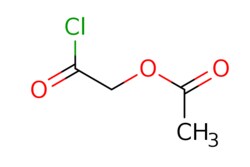
eMolecules 13831-31-7 | Acetyl chloride, 2-(acetyloxy)- | AA Blocks LLC | MFCD00011535 | 136.530 | C4H5ClO3 | 0.000 | CC(=O)OCC(Cl)=O | 5g | 796970272
Acetyl chloride, 2-(acetyloxy)- | AA Blocks LLC | 13831-31-7 | MFCD00011535 | 136.530 | C4H5ClO3 | 0.000 | CC(=O)OCC(Cl)=O | 5g | 796970272

Medchemexpress LLC 1-propanaminium, 3-carboxy-N,N,N-trimethyl-2-(1-oxopropoxy)-, chloride | 18828-58-5 | MFCD00209823 | 98.1% | 253.72 g·mol⁻¹ | C10H20ClNO4 | 5 MG

Propionyl-DL-carnitine chloride is the racemic propionyl ester of carnitine presented as the chloride salt. It is provided as a solid research reagent for biochemical and cellular studies, including inflammation-related investigations, and is offered in small, precisely measured quantities with documented purity.
- Carnitine derivative useful for inflammation research.
- Chloride salt in solid form for stable handling and storage.
- High purity specified at 98.1% for reproducible results.
- Molecular formula C10H20ClNO4; molecular weight 253.72 g·mol⁻¹.
- Supplied in small milligram packages suitable for analytical and in vitro work.
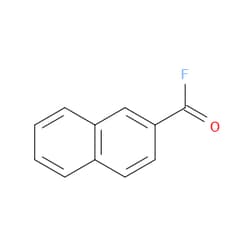
Aobchem 2-Naphthoyl fluoride | ≥97% | CAS 37827-83-1 | C11H7FO | 500mg
2-Naphthoyl fluoride | ≥97% | CAS 37827-83-1 | C11H7FO | 500mg

Aobchem 1-Naphthoyl chloride | 95% | CAS 879-18-5 | C11H7ClO | 25g
1-Naphthoyl chloride | 95% | CAS 879-18-5 | C11H7ClO | 25g